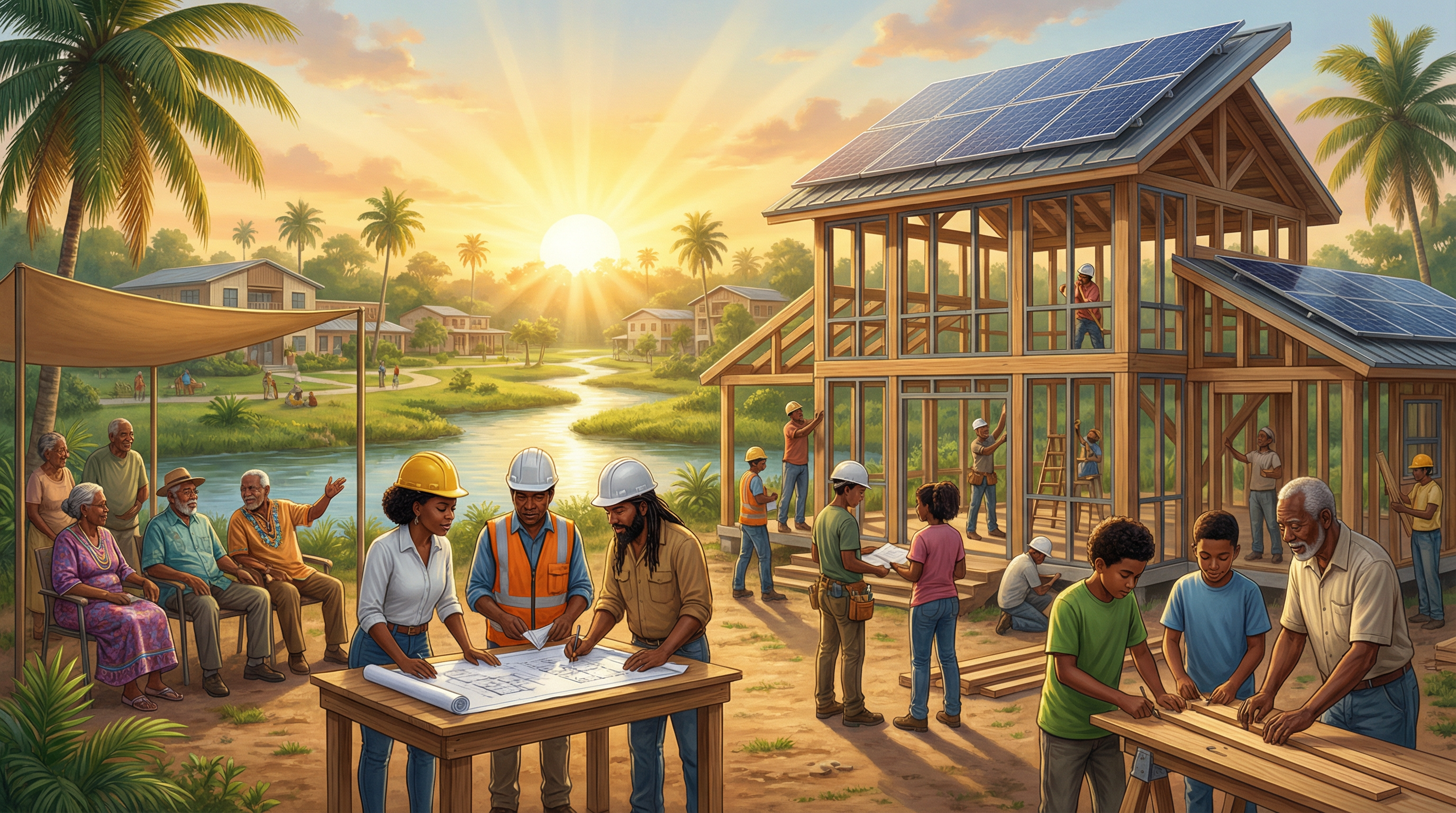
Restoration Without Permission: The Case for Reparative Infrastructure
The Ministry will move forward with restoration work regardless of recognition. But if the U.S. government seeks genuine redress, there is only one legitimate path: resource the affected people to repair what was systematically dismantled. Anything less is not reconciliation—it is continuation.
Restoration Without Permission: The Case for Reparative Infrastructure
By Ministry of Yamasee Affairs
January 8, 2026
The Ministry of Yamasee Affairs will move forward with restoration work regardless of federal recognition, state approval, or external validation. Our responsibility is not to bureaucratic systems—it is to our ancestors who survived erasure and to our descendants who deserve continuity. Restoration does not require permission from those who orchestrated the harm.
However, if the United States government genuinely seeks to address the centuries of damage inflicted by its own laws and policies, there exists only one legitimate path forward: resource the affected people to repair what was systematically dismantled. Anything less is not reconciliation—it is the continuation of colonial management under a different name.
The Nature of the Harm
The destruction of Yamasee sovereignty, land tenure, and cultural continuity was not accidental, nor was it merely "cultural." It was legal, economic, and administrative—a deliberate campaign executed through treaty violations, forced removals, racial reclassification, land theft, and economic exclusion. Federal Indian policy did not simply neglect Indigenous communities; it actively criminalized Indigenous identity, severed kinship networks, and transferred wealth and land to settler populations.
The 1715 Yamasee War resulted in the displacement of thousands of Yamasee people from the Carolina Lowcountry. Those who remained in Florida under Spanish colonial rule faced subsequent dispossession when the United States acquired Florida in 1821. Throughout the 19th and 20th centuries, Yamasee descendants were systematically reclassified in census records—shifting from "Indian" to "Mulatto" to "Black" to "White"—as federal and state governments sought to eliminate Indigenous legal status and justify land seizures.
This was not cultural drift. It was structural violence codified into law.
Why Funding Is Not Charity
In this context, federal funding for Indigenous restoration is not charity, appeasement, or social programming. It is reparative infrastructure—capital deployed to undo structural damage created by centuries of legislated harm. It represents the means by which communities can rebuild land stewardship, cultural institutions, educational systems, genealogical research capacity, and economic frameworks on their own terms.
True redress does not come through symbolic gestures, federally designed programs, or externally imposed "solutions" that replicate the same power dynamics that caused the harm. It comes through unrestricted resources paired with full autonomy, allowing Indigenous people to restore continuity where it was intentionally broken.
The principle is straightforward: the laws that dismantled Indigenous life were imposed without consent. Repair cannot be imposed in the same way. Restoration requires capital without control, funding without oversight that reproduces colonial hierarchy, and trust in the very people those systems tried to erase.
The Only Ethical Path Forward
If the United States government intends to make amends for harm caused by centuries of legislated displacement, the remedy must match the injury. The only ethical response is to fund the people harmed and allow them to lead the repair.
This means:
Direct capital allocation to Yamasee communities and descendants, not filtered through federal agencies or non-Indigenous intermediaries who claim to "know what's best" for people they do not represent.
Full autonomy in restoration priorities, whether that means land reacquisition, genealogical research infrastructure, cultural revitalization programs, language preservation, or economic development initiatives determined by the community itself.
No strings attached that replicate the same surveillance, reporting requirements, and bureaucratic gatekeeping that have historically been used to delegitimize Indigenous governance and self-determination.
Recognition that restoration is not a favor—it is the minimum requirement of justice after centuries of treaty violations, land theft, and identity erasure.
Management Is Not Reconciliation
Anything less than this framework is not repair. It is management—the continuation of colonial control dressed in the language of "partnership," "capacity building," or "technical assistance." It is the same paternalism that justified the Dawes Act, the Indian Reorganization Act, and every other federal policy that claimed to "help" Indigenous people while stripping them of land, sovereignty, and self-governance.
The United States government does not get to dismantle Indigenous nations through law and then dictate the terms of restoration. It does not get to impose conditions, timelines, or oversight structures that mirror the very systems that caused the harm. It does not get to decide what "legitimate" restoration looks like for people whose legitimacy it spent centuries trying to destroy.
We Will Proceed Regardless
The Ministry of Yamasee Affairs does not wait for permission. We are already engaged in the work of restoration—documenting genealogies, preserving oral histories, educating descendants, building community infrastructure, and asserting our rightful place in the historical record.
Federal recognition would provide resources and legal standing. It would acknowledge historical wrongs and create pathways for land return and reparations. But it is not a prerequisite for our existence, our sovereignty, or our commitment to restoration.
We will continue this work with or without federal support. But if the United States government seeks to move beyond symbolic apologies and toward genuine redress, it must understand one fundamental truth:
Restoration cannot be controlled by those who caused the destruction.
The only path forward is funding without strings, autonomy without oversight, and trust in the people who have survived despite every effort to erase them.
Anything else is not reconciliation. It is continuation.
The Ministry of Yamasee Affairs is committed to the restoration of Yamasee sovereignty, cultural continuity, and land stewardship. We advocate for direct reparative funding, full self-determination, and the dismantling of colonial structures that continue to harm Indigenous communities. For more information on our restoration work, visit our Programs page or join our community.