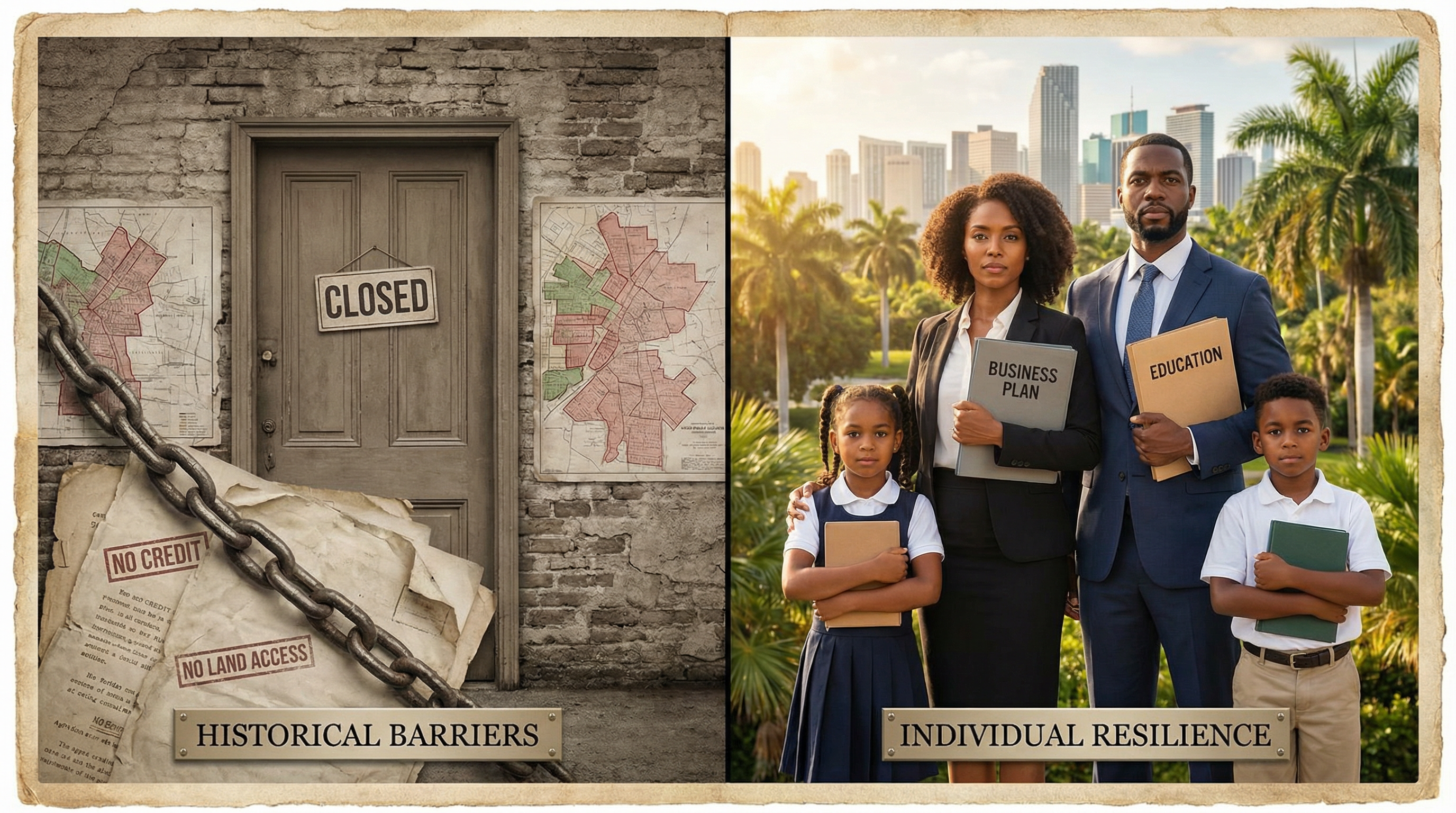
System Replacement Without Repair: Why Indigenous Economic Struggle Is Not a Personal Failure
Indigenous economic challenges are not personal failures—they are the predictable outcome of deliberate system replacement without repair. For centuries, complete Indigenous economic systems were dismantled through colonization and forced removal, then replaced with capitalism that required abandoning ancestral ways for conditional survival.
System Replacement Without Repair: Why Indigenous Economic Struggle Is Not a Personal Failure
By Ministry of Yamasee Affairs
January 8, 2026
The economic challenges facing Yamasee descendants and Indigenous communities across the United States are not the result of personal failure, lack of ambition, or insufficient financial literacy. They are the predictable outcome of a deliberate historical process: system replacement without repair. For centuries, Indigenous peoples operated complete and coherent economic systems rooted in land stewardship, kinship networks, and cultural continuity. Those systems were not outgrown or abandoned—they were systematically dismantled through colonization, forced removal, and legal exclusion. What followed was not a natural transition into modern capitalism, but coerced participation in an economic order that required abandoning ancestral ways of living in exchange for conditional survival.
Understanding this history is essential to understanding why Indigenous communities continue to face disproportionate poverty, debt, and institutional barriers—and why genuine repair requires more than access to existing systems. It requires the restoration of economic sovereignty and the resources to rebuild what was intentionally destroyed.
The Original Systems: Economy as Culture
For thousands of years before European contact, the Yamasee and related Indigenous peoples of the Southeast operated integrated systems of life that did not separate economy from governance, spirituality, education, or land stewardship. Economic activity was embedded within a cultural framework where work was not alienated from life, trade was not divorced from relationship, and wealth was measured in continuity, stability, and the ability of future generations to thrive.
Land was held collectively and managed through kinship structures that ensured sustainable use across generations. Trade networks extended across the continent, facilitating the exchange of goods, knowledge, and cultural practices without the need for currency or centralized banking institutions. Political authority was exercised through councils and consensus-building processes that prioritized community welfare over individual accumulation. Spiritual practices reinforced ecological balance and reciprocal relationships with the natural world.
This was not a primitive or underdeveloped system. It was a complete economic order that had sustained millions of people for millennia. It did not require external capital, credit scores, or property deeds to function. It operated according to its own internal logic—one that prioritized long-term sustainability over short-term extraction.
The Dismantling: How System Replacement Occurred
The destruction of Indigenous economic systems was not accidental, nor was it the inevitable result of "progress" or "modernization." It was a deliberate campaign executed through multiple overlapping mechanisms:
Land Theft and Forced Removal. The Yamasee War of 1715 resulted in the displacement of thousands of Yamasee people from the Carolina Lowcountry. Those who fled to Spanish Florida faced subsequent dispossession when the United States acquired Florida in 1821. Throughout the 19th century, federal and state governments seized millions of acres of Indigenous land through treaties, military force, and legal maneuvering. Without land, Indigenous economic systems—which were fundamentally land-based—could not function.
Racial Reclassification and Identity Erasure. Throughout the 19th and 20th centuries, Yamasee descendants were systematically reclassified in census records—shifting from "Indian" to "Mulatto" to "Black" to "White"—as federal and state governments sought to eliminate Indigenous legal status. This erasure severed people from tribal affiliation, land claims, and treaty rights. It also fragmented kinship networks that had once facilitated economic cooperation and mutual aid.
Criminalization of Indigenous Practices. Federal Indian policy actively criminalized Indigenous cultural practices, including traditional governance structures, spiritual ceremonies, and economic activities such as hunting, fishing, and land stewardship. The Indian Civilization Act of 1819, the Dawes Act of 1887, and subsequent policies forced Indigenous people to adopt European-American economic models or face legal penalties, loss of land allotments, and removal of children to boarding schools.
Coerced Entry into Capitalism. The modern banking and capitalist system did not arrive as an upgrade or voluntary choice. It arrived after land had been stripped, political power removed, and economic continuity broken. Participation in wage labor, credit markets, and property ownership was made mandatory only after the preconditions for success—land ownership, stable institutions, documented lineage, and political leverage—had been systematically denied.
As a result, generations of Indigenous people were forced to operate in a system where:
-
Land was no longer held, but rented or taxed. Property ownership required legal documentation, credit access, and capital accumulation—all of which had been made inaccessible through prior dispossession.
-
Labor replaced stewardship as the primary means of survival. Instead of managing land and resources for communal benefit, people were forced to sell their labor to survive, often in exploitative conditions with no pathway to wealth accumulation.
-
Credit replaced relationship as the gatekeeper to opportunity. Access to housing, education, and business capital became dependent on credit scores, bank approvals, and financial histories—systems that assumed uninterrupted generational participation and penalized those without it.
-
Paperwork replaced lineage as proof of existence. Legal identity, property claims, and tribal affiliation required documentation that had been deliberately destroyed, withheld, or never created for Indigenous people in the first place.
This created a permanent condition of "catch-up"—a structural disadvantage that no amount of individual effort could overcome.
The Psychological Damage: Internalizing Structural Exclusion
The damage inflicted by system replacement was not only economic—it was psychological. People raised inside systems that criminalized their ancestors' way of life were taught, implicitly and explicitly, that:
- Their culture was backward, irrelevant, or incompatible with modern life.
- Their economic struggles were personal failures rather than the predictable outcomes of structural exclusion.
- Their lack of access to capital, credit, and opportunity was due to poor decision-making, not centuries of dispossession and legal discrimination.
This produced generational confusion: people expected to perform inside a system they did not design, using rules they were never taught, while carrying the unhealed consequences of displacement. The result is what we see today among many Indigenous descendants:
- Disproportionate debt resulting from predatory lending, lack of generational wealth, and limited access to fair credit.
- Fragile access to capital, with Indigenous entrepreneurs and families facing higher rejection rates for loans, mortgages, and business funding.
- Low institutional trust, as communities remember—through lived experience and oral history—that banks, courts, and government agencies have historically served as instruments of dispossession rather than protection.
- Fragmented identity, as people navigate the tension between ancestral heritage and the demands of assimilation into systems that do not recognize or value Indigenous ways of being.
- A constant struggle to "qualify" for systems that assume uninterrupted generational participation—credit histories, property ownership, documented lineage, and institutional connections that were systematically denied to Indigenous families.
This is not accidental. It is the predictable outcome of system replacement without repair.
The Structural Problem in the Present Day
Today, the same systems that caused the damage are positioned as the solution. Government programs, banks, and institutions offer assistance—but only through structures that:
-
Maintain external control. Federal Indian policy, social services, and economic development programs are designed and administered by non-Indigenous institutions, often with little input from the communities they claim to serve.
-
Impose modern compliance without restoring historical loss. Indigenous people are expected to meet credit requirements, documentation standards, and regulatory frameworks that assume a level of institutional access and generational wealth that was deliberately denied to their ancestors.
-
Treat symptoms without addressing origin. Programs focus on financial literacy, job training, and small business loans—interventions that assume the problem is individual capacity rather than structural exclusion. They do not address land return, reparations, or the restoration of economic sovereignty.
The expectation is assimilation, not repair. Indigenous people are told to "catch up" to a system that was built on their dispossession, using tools designed for people who never lost land, wealth, or institutional standing in the first place.
Yet true restoration cannot be imposed from the outside. The people who lost land, governance, and economic continuity must be resourced to rebuild those systems themselves, using modern tools where useful—but grounded in ancestral logic and cultural authority.
Why We Are Doing the Work Ourselves
The Ministry of Yamasee Affairs is moving forward with restoration work regardless of federal recognition, state approval, or external validation. We are documenting genealogies, preserving oral histories, educating descendants, building community infrastructure, and asserting our rightful place in the historical record. We are doing this because we understand the problem—and we know that waiting for permission or external solutions will only perpetuate the cycle of exclusion.
But the unresolved problem remains: the United States has never repaired the legal and economic damage caused by its own policies. Instead, it has layered new systems on top of old wounds and called the resulting struggle "inequality," "underdevelopment," or "lack of financial literacy."
The truth is simpler and harder to accept:
You cannot remove a people from their land, dismantle their economy, criminalize their survival, erase their identity from the record, and then measure their success by how well they perform in the system that replaced it.
What Repair Looks Like
Genuine repair requires more than access to existing systems. It requires:
Land return and reparations to restore the economic foundation that was stolen. Without land, Indigenous communities cannot rebuild the stewardship-based economies that sustained them for millennia.
Direct capital allocation to Indigenous communities and descendants, not filtered through federal agencies or non-Indigenous intermediaries. This capital must be unrestricted, allowing communities to determine their own restoration priorities—whether that means land reacquisition, business development, cultural revitalization, or educational infrastructure.
Recognition of economic sovereignty, allowing Indigenous communities to operate according to their own cultural logic and governance structures rather than being forced into compliance with systems designed without them.
Acknowledgment of historical harm, not as a symbolic gesture, but as the foundation for policy change. The United States must recognize that Indigenous economic struggle is not a personal failure—it is the direct result of centuries of legislated dispossession.
Anything less is not repair. It is the continuation of the same system replacement that caused the problem in the first place.
Conclusion: The Work Continues
We will continue this work with or without federal support. But if the United States government seeks to move beyond symbolic apologies and toward genuine redress, it must understand one fundamental truth:
System replacement without repair is not progress. It is structural violence.
The Yamasee people and Indigenous communities across the United States deserve more than conditional access to systems built on their dispossession. They deserve the restoration of economic sovereignty, the return of stolen land, and the resources to rebuild what was intentionally destroyed.
That is not charity. That is justice.
The Ministry of Yamasee Affairs is committed to the restoration of Yamasee sovereignty, cultural continuity, and economic self-determination. We advocate for land return, direct reparative funding, and the dismantling of colonial structures that continue to harm Indigenous communities. For more information on our restoration work, visit our Programs page or join our community.