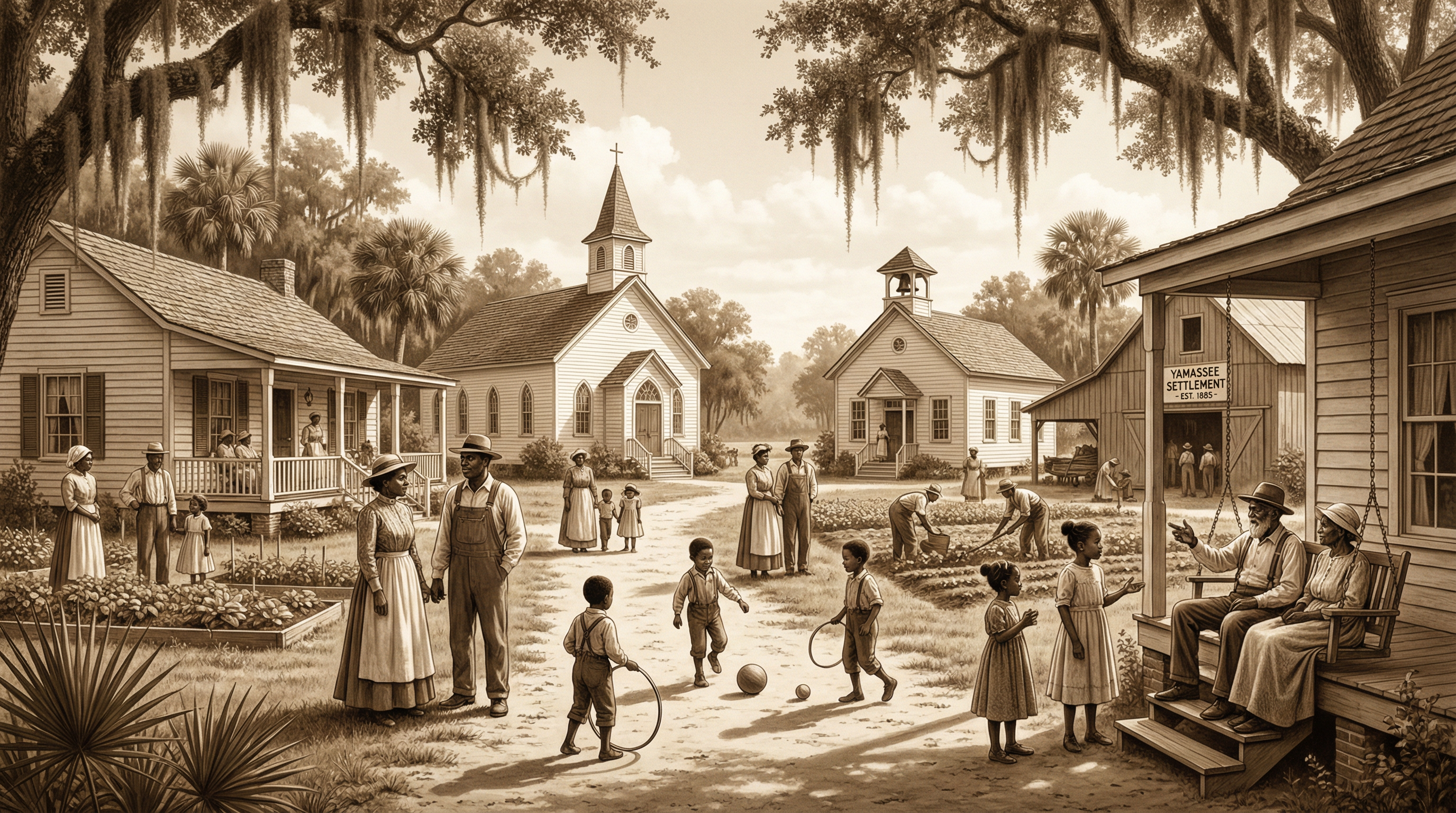
The Yamassee Settlement: How DeLand, Florida Became a Beacon of Black-Indigenous Identity
In the late 19th century, Black families in DeLand, Florida did something extraordinary: they publicly named their neighborhood "Yamassee" after the Indigenous nation that had fought British colonization. This is where the Ministry's research begins.
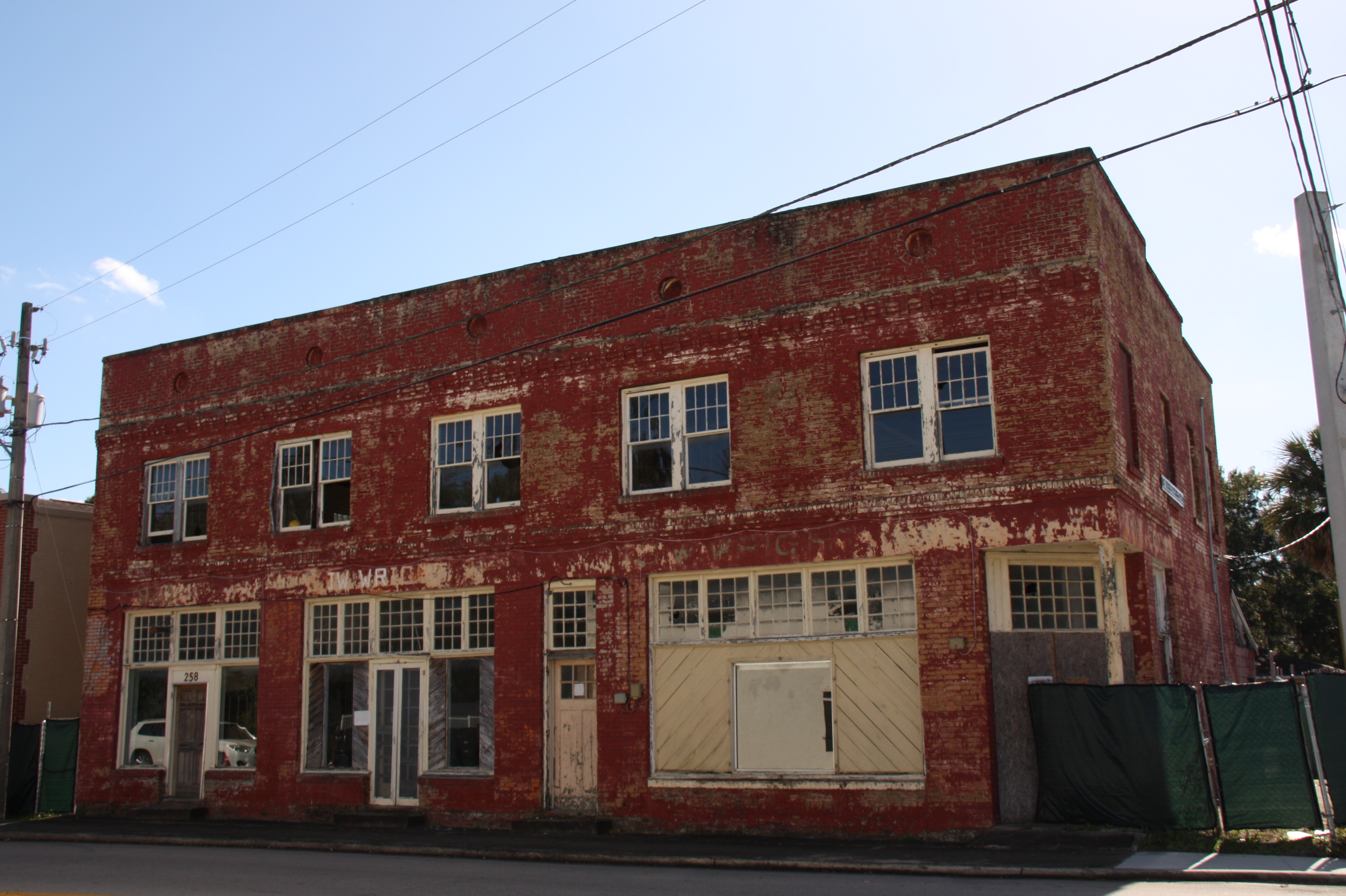 The James W. Wright Building (1920), National Register of Historic Places - the oldest surviving African American commercial building in DeLand, Florida. Wright named his neighborhood "Yamassee" after his Indigenous ancestors.
In the late nineteenth century, as Jim Crow laws tightened their grip across the American South and federal policies sought to erase Indigenous identity through blood quantum rules and forced removal, a remarkable community emerged in central Florida. In DeLand, a small citrus town in Volusia County, Black families did something extraordinary: they publicly named their neighborhood "Yamassee" after the Indigenous nation that had fought—and nearly defeated—British colonization two centuries earlier.
This was not accidental. This was not coincidental. This was a deliberate act of identity reclamation at a time when asserting Indigenous heritage could cost you land, livelihood, and life.
The story of DeLand's Yamassee Settlement reveals where the Ministry of Yamasee Affairs' research begins—in the lived experience of families who refused to forget who they were, even when the law demanded they choose between "Black" or "Indian," knowing either choice meant dispossession.
The Man Who Named a Neighborhood After His Ancestors
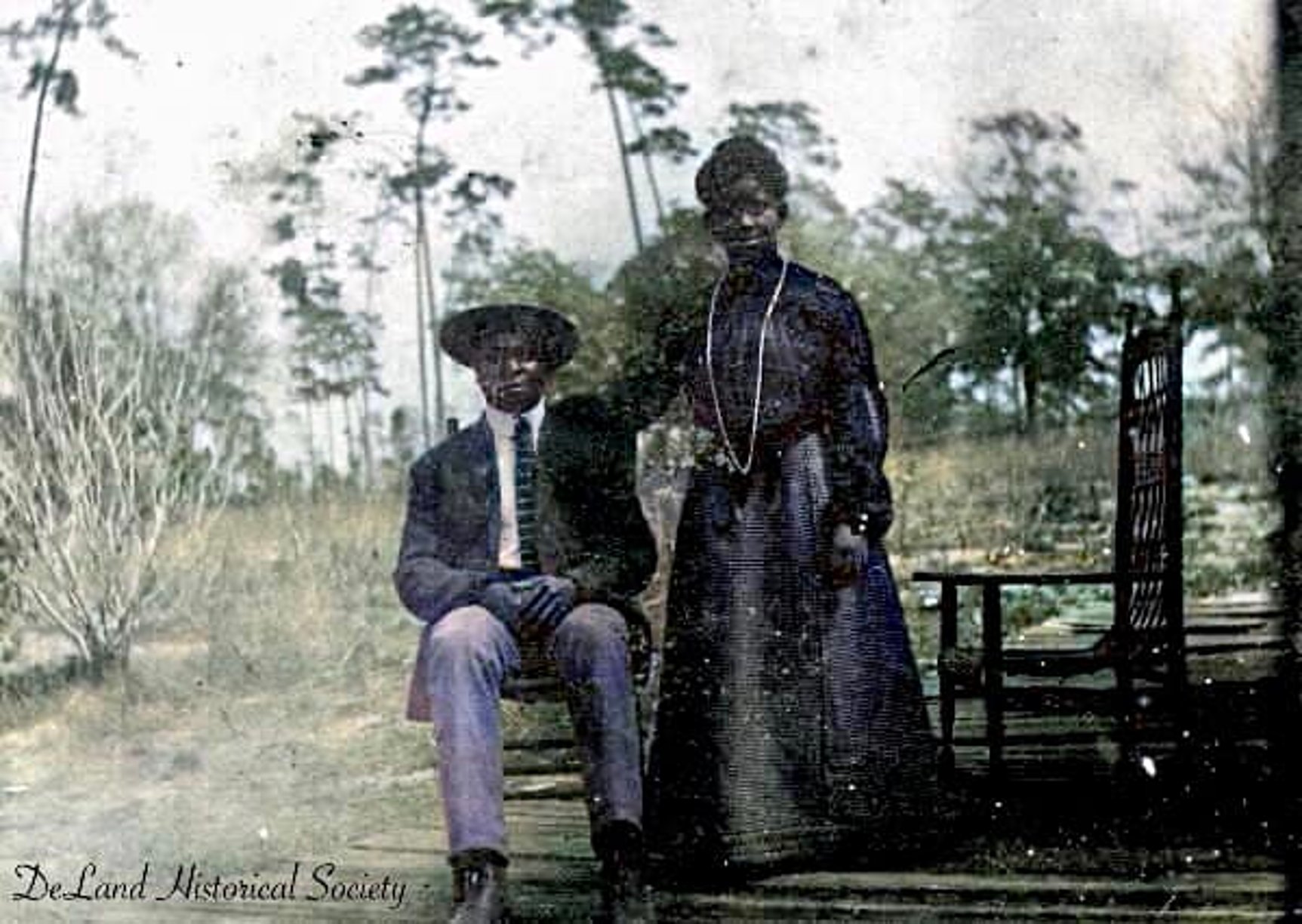 Black families in DeLand, Florida during the early 1900s - the era when James Washington Wright built his citrus empire and established the Yamassee Settlement.
James Washington Wright Sr. arrived in Volusia County sometime in the 1880s with, by his own account, "$1.50 in his pocket." Born in Florida on September 28, 1875, Wright came of age during Reconstruction's collapse and the rise of segregation. Yet within three decades, he had built a citrus empire worth $35,000 to $40,000—equivalent to nearly $900,000 today—and owned 250 acres of prime Florida land.
But Wright's most significant legacy was not his wealth. It was what he chose to call the Black neighborhood he developed: Yemassee (also spelled Yamassee).
By the 1920s, local newspapers explicitly referred to Wright's commercial district as located "in the larger African American neighborhood known as Yemassee." The DeLand Historical Society confirms this was not a nickname imposed from outside—it was a name chosen by the community itself, championed by Wright and his peers as they cleared land, planted citrus, and built institutions.
The choice of this name was profound. The Yamasee were not a distant, romanticized tribe from textbooks. They were a living memory—a people who had allied with escaped African slaves in Spanish Florida, fought the British in 1715, and established free Black-Indigenous communities like Fort Mose near St. Augustine in 1738. For Wright to name his neighborhood "Yamassee" in the 1890s was to say: "We are the Yamasee people, returned."
The Yamassee War and the Flight to Florida
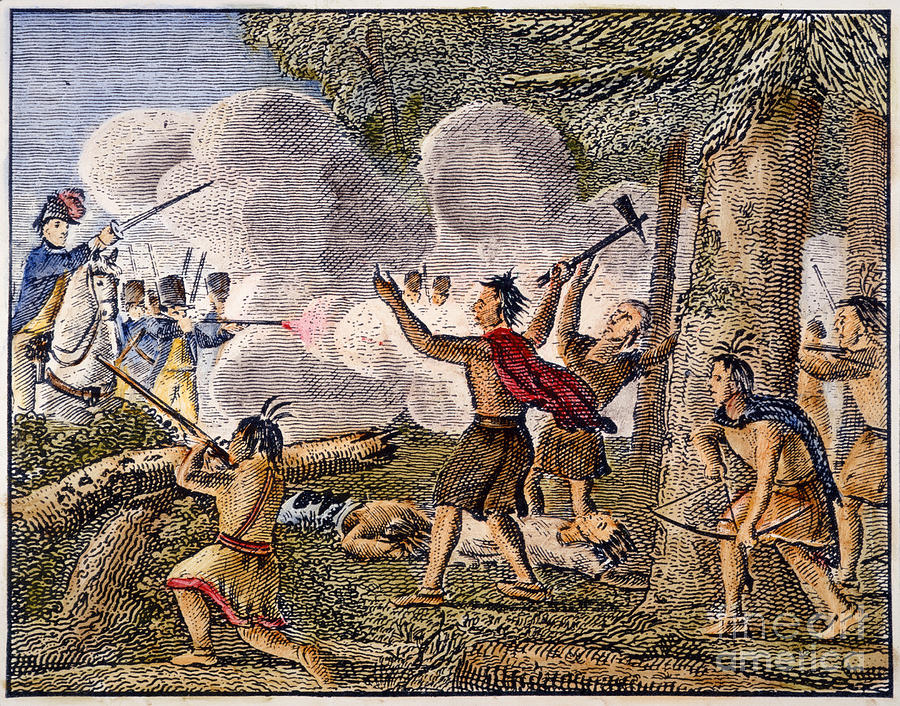 Historical illustration of the Yamasee War (1715-1717), when the Yamasee Nation launched a coordinated uprising against British colonists in South Carolina. Nearly 7% of South Carolina's colonial population died in the first year—proportionally deadlier than the American Revolution or Civil War.
To understand why this naming matters, we must return to 1715. The Yamasee War erupted in April of that year when the Yamasee Nation—allied with the Creek, Catawba, and other Indigenous peoples—launched a coordinated uprising against British colonists in South Carolina. The cause was clear: land encroachment, debt slavery, and the British practice of enslaving Indigenous people and selling them to Caribbean plantations.
The war was devastating. Nearly seven percent of South Carolina's colonial population died in the first year—proportionally deadlier than the American Revolution or Civil War. The British ultimately prevailed through superior firepower and divide-and-conquer diplomacy, but the Yamasee did not surrender. Hundreds fled south into Spanish Florida, where they were welcomed as allies against British expansion.
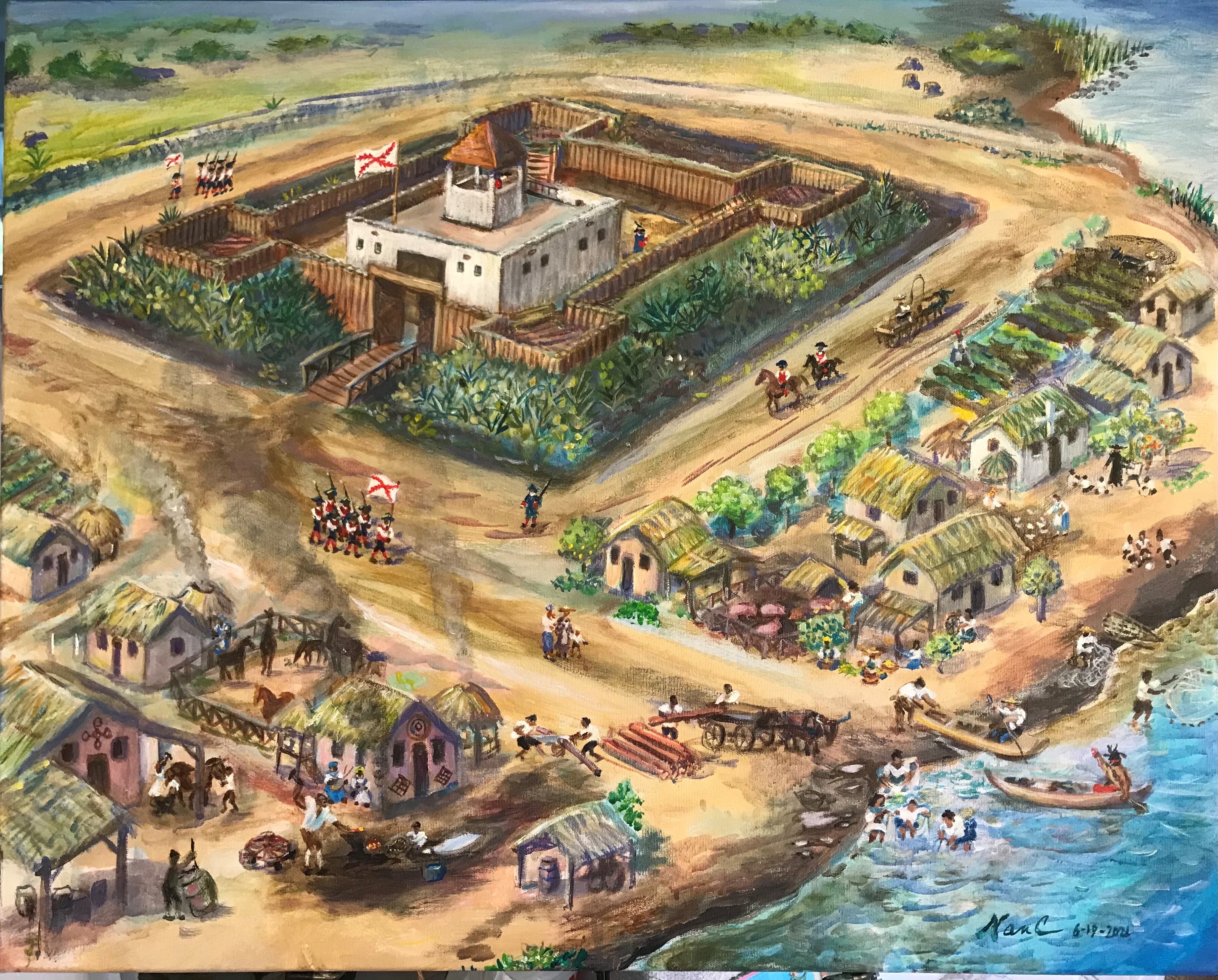 Artistic reconstruction of Fort Mose (Gracia Real de Santa Teresa de Mose), established in 1738 near St. Augustine, Florida - the first legally sanctioned free Black town in what is now the United States. The fort was commanded by Black militia under Captain Francisco Menéndez, who had fought alongside Yamasee warriors.
Spanish records document that the Yamasee established a town called Ocotoque near St. Augustine and remained a distinct community "from 1716 until about 1752." During this period, they lived in proximity to African freedom seekers who had escaped British slavery. The Spanish policy of offering sanctuary to escaped slaves led to the 1738 founding of Gracia Real de Santa Teresa de Mose—Fort Mose—the first legally sanctioned free Black town in what is now the United States.
The commander of Fort Mose's Black militia was Captain Francisco Menéndez, an African man who had fought in the Yamasee War alongside Chief Jorge before fleeing to Florida. Menéndez's story illustrates the direct lineage between Yamasee resistance and Black freedom communities. By the 1800s, scholars note, many Black families in Florida—especially those associated with Seminole or maroon communities—"carried Yamasee bloodlines and traditions."
When James Washington Wright named his DeLand neighborhood "Yamassee" in the 1890s, he was not inventing a connection. He was asserting continuity.
The Founding of the Yamassee Settlement (1880s-1893)
DeLand itself was founded in 1876 by Henry Addison DeLand, a New York businessman who made his fortune in baking soda and invested in Florida's citrus boom. The town grew rapidly, attracting settlers from across the South. Among them were Black families—some formerly enslaved, some free for generations—who arrived in the 1880s seeking land and opportunity.
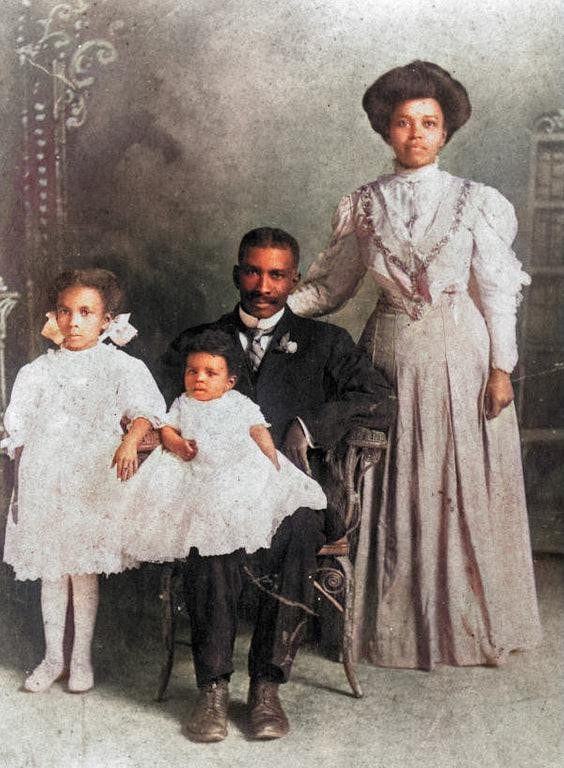 A Florida Black family from the late 1800s (colorized historical photograph). Families like these established the Yamassee Settlement in DeLand, publicly celebrating their Indigenous roots at a time when such assertions were dangerous.
The earliest institution of the Yamassee community was Greater Union First Baptist Church, organized in 1882 by Black residents of DeLand. At the time, it was the only Black church in the area and likely served as a focal point for Black-Indigenous families. The church's early presence—only six years after DeLand's founding—indicates that a stable Black population, possibly including Yamasee descendants, was already rooted in the area within two decades after the Civil War.
In 1893, the congregation moved to a new building at 240 South Clara Avenue, placing it in the heart of what would become the Yamassee neighborhood. That same year, in nearby Columbia County, Mary Day received a federal land patent for 80 acres—evidence of Black-Indigenous families securing land across north-central Florida during this period.
The timing is striking. The 1890s were the height of Jim Crow segregation, the era of Plessy v. Ferguson (1896), and the period when the federal government was aggressively categorizing people as either "white," "Black," or "Indian"—with "Indian" often meaning removal to Oklahoma. Yet in DeLand, a Black community was publicly celebrating its Indigenous roots.
As one historical analysis notes, the Yamassee Settlement "stands as a rare instance where a Black community publicly celebrated its Indian roots as a source of pride and legitimacy." The residents were saying, in effect: "We are the Yamasee people, returned. We were always more than just freedmen—we are the land's original people."
Building the Yamassee Business District
By the early 1900s, the Yamassee Settlement had become a thriving, self-contained Black district centered around Voorhis, Clara, Euclid, Garfield, and Boston Avenues in southwest DeLand. James W. Wright emerged as its leading entrepreneur and community builder.
Wright's citrus success was extraordinary. By 1913, he was shipping 12,000 boxes of oranges annually to wholesalers in Boston and New York, earning about $15,000 per season (roughly $400,000 today). He owned 250 acres by 1915, with 60 acres planted in citrus. Crucially, Wright built his own citrus packinghouse on West Minnesota Avenue, allowing him to process fruit for both Black and white neighbors—a rare vertical integration for a Black farmer in the Jim Crow South.
Wright's success caught the attention of Dr. Booker T. Washington, founder of the National Negro Business League. In 1915, Washington personally invited Wright to speak at the League's annual convention in Boston. Wright was given the honor of being the first speaker to open the sessions, sharing the stage with luminaries like Abraham Lincoln Lewis (Florida's first Black millionaire) and R.C. Calhoun (founder of the Robert Hungerford School in Eatonville).
Wright's speech became famous for one line. When Booker T. Washington playfully asked if oranges grown by a Black man were as good as those grown by whites, Wright humorously replied: "The consumers don't know black oranges from white oranges." The audience erupted in laughter and applause, and Wright's philosophy—that given equal resources, Black farmers could compete with anyone—was encapsulated in that witty retort.
The J.W. Wright Building: A Monument to Defiance
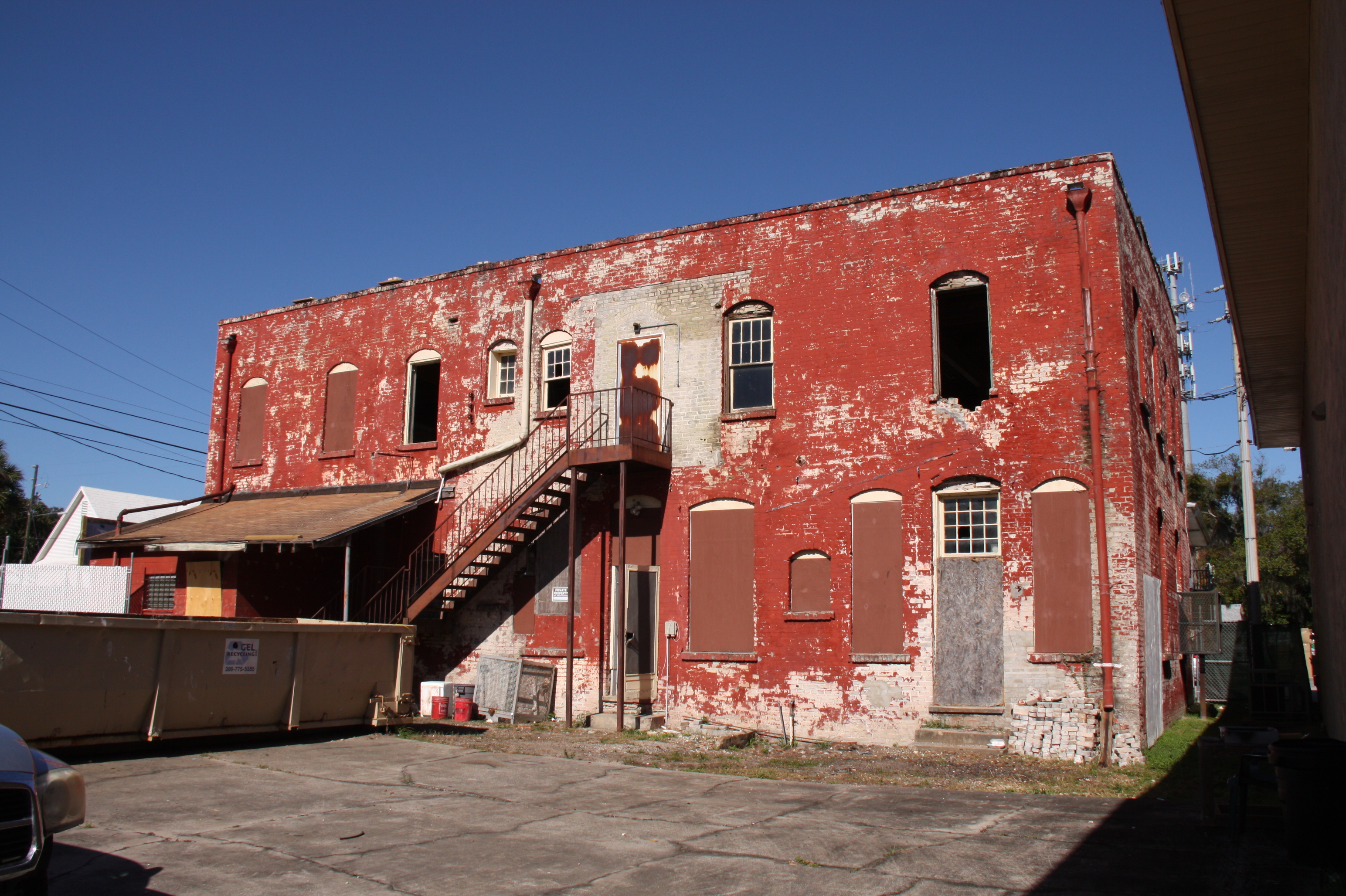 The J.W. Wright Building at 258 West Voorhis Avenue, known locally as "Wright's Corner." Wright operated four businesses himself and leased space to at least 17 other merchants, including both Black and white business owners—an extraordinary act of economic power in the Jim Crow South.
In 1920, flush with profits and confidence, Wright undertook the construction of a two-story masonry commercial building at 258 West Voorhis Avenue, on the corner of Voorhis and Clara. The building cost $15,000—a huge investment for a Black man at that time. Wright hired Francis Miller, a prominent white architect, and Rufus Knight, a white contractor, ensuring the building would be sound and modern. The structure was made of sand-lime bricks from the Bond Sandstone Brick Company in nearby Lake Helen, where Black laborers manufactured the bricks.
The Wright Building became the hub of Black business life in DeLand, known locally as "Wright's Corner." Wright operated four businesses himself—a grocery store, confectionary, bar, and restaurant—and leased space to at least 17 other merchants, including a dry goods store, meat market, shoeshine business, and Dr. Samuel W. Poole's dental office (which served both Black and white patients from 1931 onward). Upstairs, Wright rented apartments to at least three families.
Remarkably, despite segregation, Wright rented space to both African American and white business owners. He also extended mortgages to white real estate investors during the 1920s Florida Land Boom—and when the boom collapsed, he successfully sued white debtors for unpaid mortgages, winning payment in court. This was an extraordinary act of economic power and legal defiance in the Jim Crow South.
Wright also partnered with Mary McLeod Bethune, the legendary educator and civil rights leader, in the 1920s and 1930s to create exhibits on Black successes for display at Volusia County fairs. This connection to Bethune—one of the most significant Black leaders in American history—demonstrates Wright's stature in the regional community.
Wright owned the building until his death in 1956. Today, the J.W. Wright Building is owned by Greater Union Life Center, the charitable arm of Greater Union Baptist Church—the same church founded in 1882 in the Yamassee Settlement. On February 1, 2021, the building was listed on the National Register of Historic Places, recognized as the oldest surviving African American commercial building in DeLand.
The Cultural Life of Yamassee
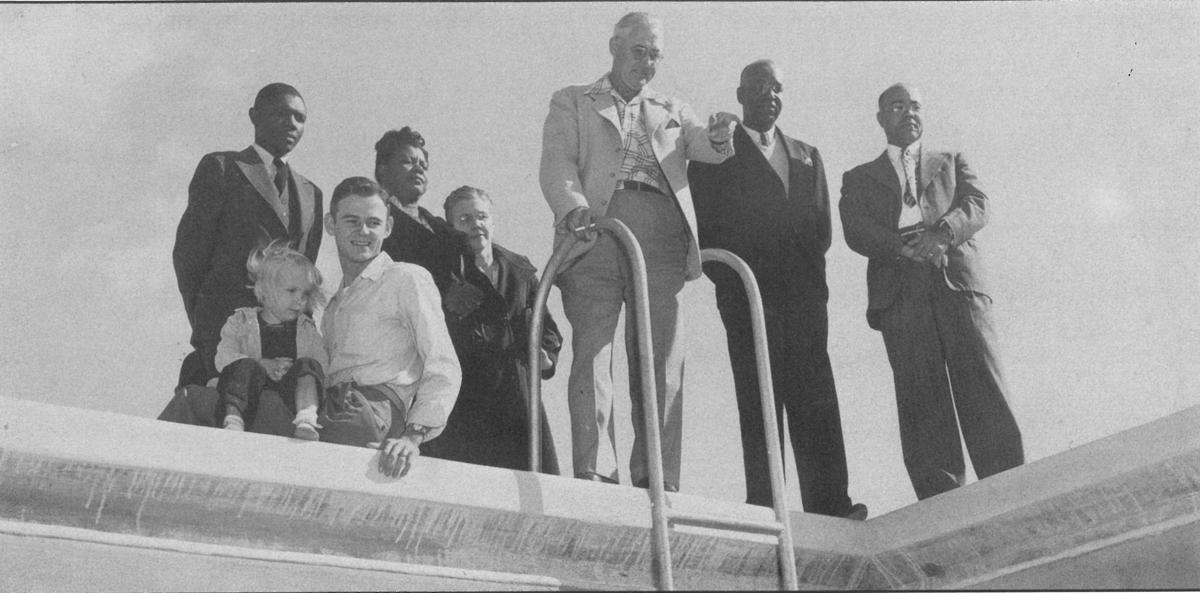 A community groundbreaking ceremony in DeLand, Florida - representing the institutional building and civic pride that characterized the Yamassee Settlement.
The Yamassee Settlement was more than a business district. It was a complete community with its own institutions, social life, and cultural identity. In addition to Greater Union Baptist Church, the neighborhood supported:
- Fraternal orders: Masonic lodges, Eastern Star chapters, and other mutual aid societies
- Wilhelmina Johnson's Providence Industrial School: A school for Black children, active by 1915
- Booker T. Washington Theater: Opened in 1921 near Wright's Corner, providing entertainment and cultural programming
- Small businesses: Barbershops, cafes, boarding houses, and shops that served the community
The physical development of the area reflected Black craftsmanship and pride. Many of the bricks used in constructing local buildings came from the Bond Sandstone Brick Company yard in nearby Lake Helen, where most of the brickyard workers and brick masons were African American. Thus, the material culture of the Yamassee Settlement—its homes, church, and commercial blocks—was literally built by Black hands.
By the turn of the twentieth century, the Yamassee community was thriving enough to support its own institutions. It was in this supportive environment that James W. Wright emerged as a leader and "citrus king," using his success to further cement the community's presence.
Why "Yamassee" Signified More Than Just Freedmen
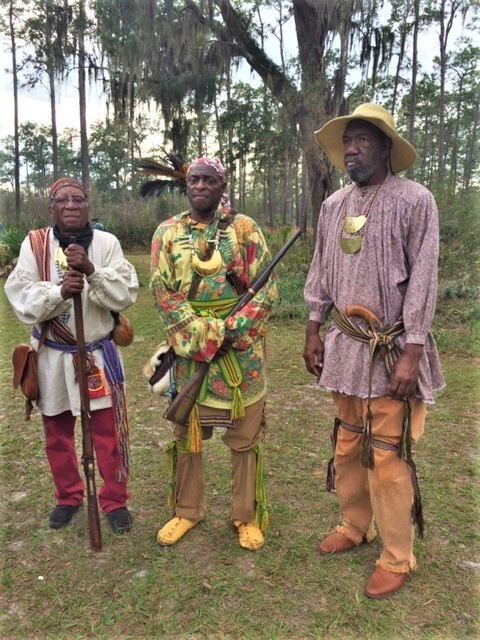 Black Seminole warriors - descendants of the Yamasee and African freedom seekers who allied in Florida. By the 1800s, many Black families in Florida carried Yamasee bloodlines and traditions.
Contemporary sources used both spellings—"Yamasee" and "Yemassee"—interchangeably in documents referring to the DeLand settlement. The name itself likely derives from a Lower Muskogean word, possibly meaning "gentle" or referencing a place. But for DeLand's residents, "Yemassee" signified a connection to a proud warrior people and perhaps a not-so-secret acknowledgement that "we were always more than just freedmen—we are the land's original people."
This bold assertion of dual heritage (Black and Native) is remarkable, occurring at a time when Jim Crow laws and the "one-drop rule" often forced people to hide or downplay Native ancestry. The Yamassee Settlement stands as a rare instance where a Black community publicly celebrated its Indian roots as a source of pride and legitimacy.
The timing of the Yamassee naming in the 1890s-1920s coincides with:
- The founding of Greater Union Baptist Church (1893)
- Mary Day's federal land patent (1893)
- The establishment of Black landowners across north-central Florida
- The height of Jim Crow segregation and Indigenous removal policies
This suggests a coordinated effort by Black-Indigenous families to establish permanent presence and assert their identity at a time when both were under attack.
The Research Question: Did Wright Come from Yamasee Country?
One critical question remains unanswered: Where was James Washington Wright born, and who were his people?
Wright's tombstone at DeLand's Union Cemetery confirms he was born September 28, 1875, in Florida. However, details of his birthplace and parentage remain scarce. Wright often recounted that he "arrived in Volusia County with $1.50 in [his] pocket," implying he came as a young man seeking work, likely in the 1880s or early 1890s.
Given the era and his later claims, it is possible Wright's family had come to Florida from elsewhere in the South during Reconstruction. If Wright migrated from South Carolina—specifically from the Yamasee country near the Savannah River—then the naming choice suggests deep familiarity with Yamasee identity and history.
The Ministry of Yamasee Affairs is actively researching:
- 1900 and 1910 U.S. Census records for James W. Wright in Volusia County
- 1870 and 1880 Census records for Wright family in South Carolina and Georgia
- Volusia County death certificate (1956)
- National Register nomination documents prepared by Sidney Johnston at Stetson University
- National Negro Business League archives at the Library of Congress
If Wright came from South Carolina Yamasee country, then the "Yemassee Settlement" in DeLand represents a deliberate reconstruction of Yamasee community in Florida—a continuation of the same migration pattern that brought Yamasee survivors to Spanish Florida after the 1715 war.
The Legacy of the Yamassee Settlement
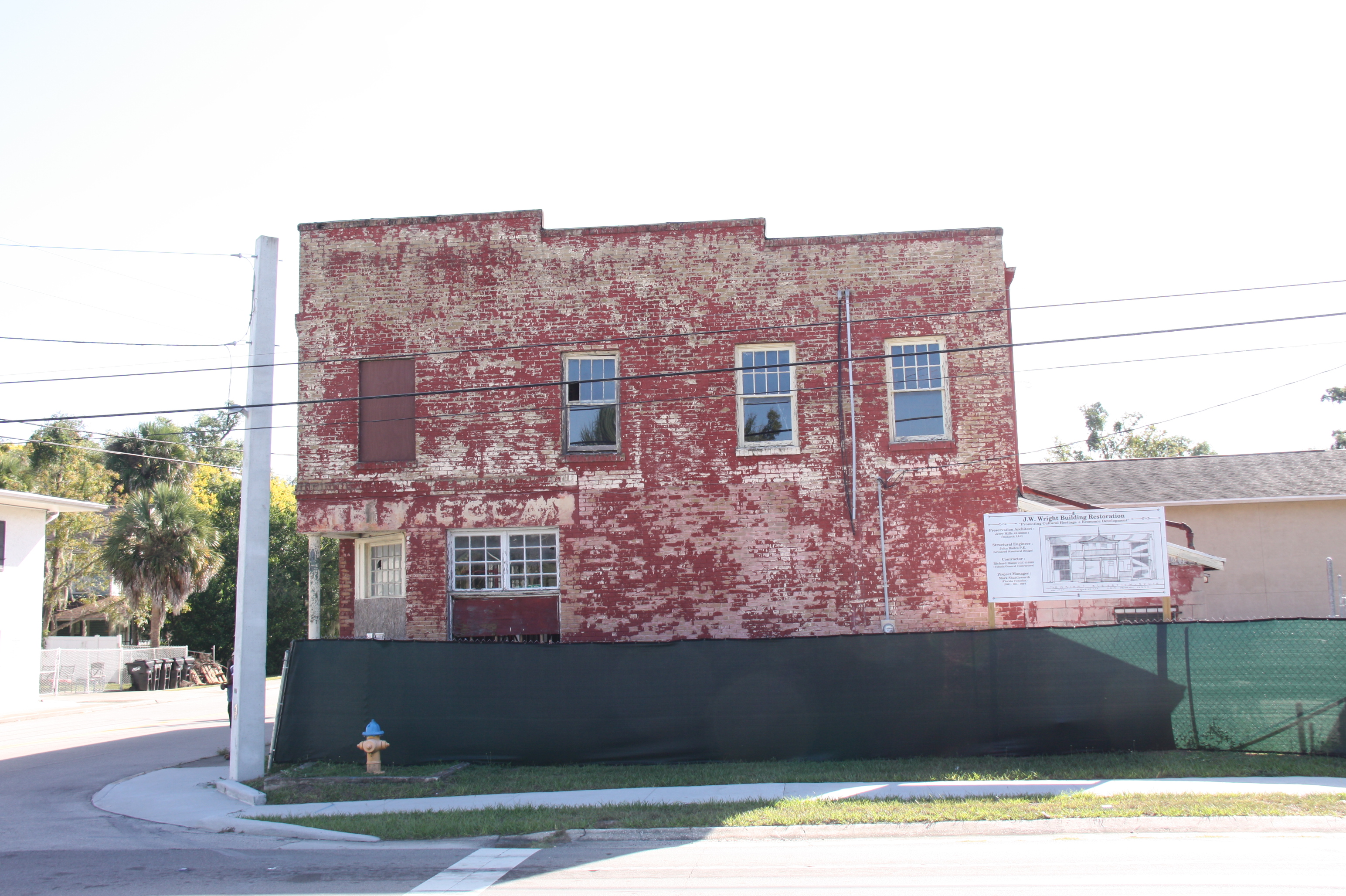 The J.W. Wright Building today, undergoing restoration by Greater Union Life Center with $600,000 in funding, including a $100,000 grant from the National Trust for Historic Preservation.
The Yamassee Settlement in DeLand, Florida, is more than a footnote in local history. It is primary historical evidence of Black-Indigenous identity assertion in the late nineteenth and early twentieth centuries. It demonstrates that:
-
Black families in the 1890s were consciously asserting Indigenous identity through the names they gave their neighborhoods, the churches they built, and the land they claimed.
-
The Yamasee name was not forgotten—it was carried forward by families who understood their connection to the Indigenous nation that had fought British colonization and allied with African freedom seekers.
-
Economic power and institutional building were tools of resistance—Wright's citrus empire, his building, his partnerships with figures like Mary McLeod Bethune, and his willingness to sue white debtors all represent acts of sovereignty.
-
The Yamassee Settlement intersects with the same timeline as other Black-Indigenous land claims—Mary Day's 1893 land patent, the founding of Greater Union Baptist Church in 1893, and the establishment of Black communities across north-central Florida.
Today, the J.W. Wright Building stands as a monument to this legacy. Greater Union Life Center is restoring the building with $600,000 in funding, including a $100,000 grant from the National Trust for Historic Preservation. The restoration is led by Sidney Johnston of Stetson University and restoration expert Mark Shuttleworth.
The Yamassee Settlement tells us that James Washington Wright may have been building exactly what the Ministry of Yamasee Affairs is now seeking to restore: a deliberate reconstruction of Yamasee community, identity, and sovereignty in Florida.
Conclusion: The Research Origin Story
When people ask the Ministry of Yamasee Affairs, "Where does your research come from? How do you know the Yamasee survived in Florida?"—the answer begins here, in DeLand.
It begins with a man who named a neighborhood after his ancestors.
It begins with a church founded in 1882 by families who knew who they were.
It begins with land patents, citrus groves, and commercial buildings that still stand today.
It begins with the deliberate, public assertion of Indigenous identity at a time when such claims were being systematically erased.
The Yamassee were never conquered. As keepers of Florida, we never will be.
Learn More:
- James Washington Wright Sr.: The Citrus King Who Named a Neighborhood After His Ancestors (Coming Soon)
- From the Yamasee War to Florida's Freedom: Tracing 300 Years of Continuity (Coming Soon)
- Keepers of Florida: The Hidden Yamasee Legacy (Available Now)
References:
- DeLand Historical Society, "James W. Wright, Pioneer DeLand Businessman" (November 28, 2025)
- West Volusia Beacon, "DeLand's famous Wright Building has a rich history" (February 28, 2021)
- Florida Division of Historical Resources, "James W. Wright Building" National Register listing (February 1, 2021)
- Daytona Times, "Business district part of DeLand's rich Black heritage" (February 15, 2018)
- Yahoo News/Daytona Beach News-Journal, "10 things to know: J.W. Wright, the DeLand building and the restoration effort" (March 22, 2022)
- Jane Landers, "The Atlantic Transformations of Francisco Menéndez," in Biography and the Black Atlantic (ACLS, 2023)
- Fort Mose Historical Society, "The Fort Mose Story" (https://fortmose.org)
- DeLand Historical Society, "The Founding of DeLand, Florida: A History" (April 27, 2023)
- Daytona Times, "DeLand Black Heritage Trail a reality" (April 14, 2023)